Identity as the Cornerstone of Zero Trust Security
Users are accessing resources from anywhere—across cloud, on-premises, and hybrid environments—expanding the attack surface. Identity attacks continue to rise, reinforcing the need to treat identity as a core security control.
Zero Trust starts with knowing who is on the network
Identity is the cornerstone of a Zero Trust strategy: organizations must determine who the user is (employee, guest, supplier, temporary worker), what access they should get, and apply a least-access policy that allows only the resources necessary for the role, with the ability to revoke access as needed.
Controls that enable and manage access
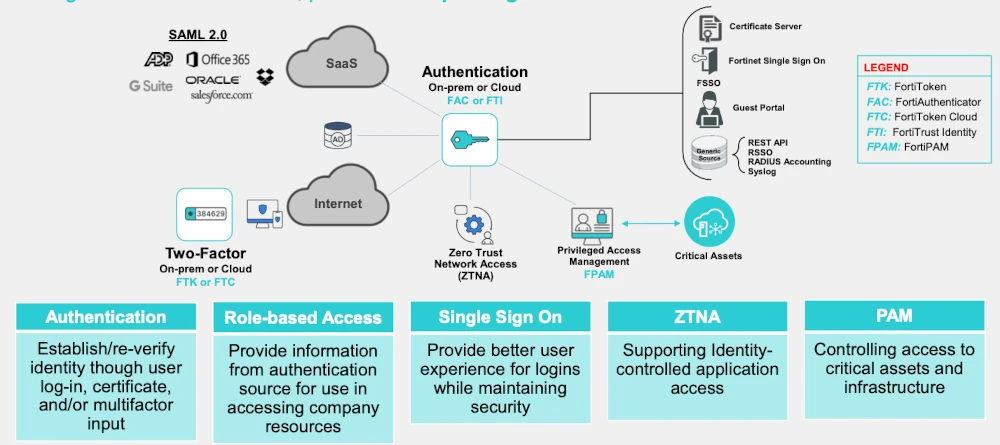
- Authentication: establish or re-verify identity via login, certificates, and/or multifactor input.
- Single Sign-On (SSO): streamline logins while maintaining security.
- Role-based Access: use identity information to govern access to company resources.
Fortinet Solutions for Integrated identity (on-premises and cloud)
User experience and security enhancements
- Integrated and centralized IAM to simplify and reduce IT workload.
- MFA options (email, SMS, token, certificates, passwordless) plus adaptive factors such as location and time-of-day.
- SSO for ease of use and self-service portals for users.
Alignment and platform context
Identity-centric security aligns with the NIST Cybersecurity Framework to improve risk management and operates within the Fortinet Security Fabric platform alongside Secure Networking, Unified SASE, and AI-driven SecOps.
Why organizations choose this approach
- All-inclusive IAM (authentication, MFA, SSO, PAM) integrated as the source of identity.
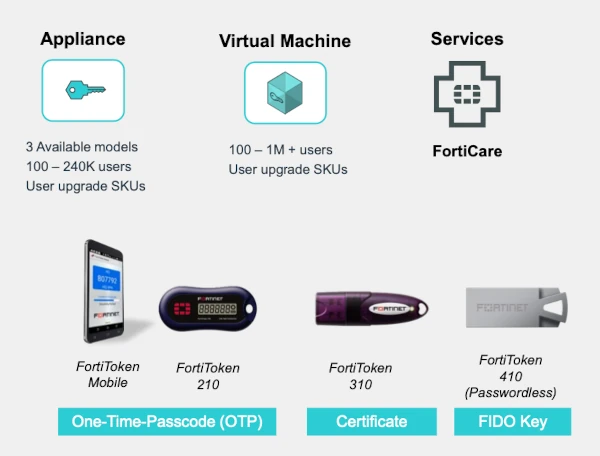
- Centralized management and licensing with flexible deployment options across appliances, software, and cloud.
- Zero Trust access for user identity with least-privilege authentication and strong, adaptive methods (including passwordless).
Taken together, these capabilities reinforce identity as the foundation for Zero Trust: verifying users, applying least-privilege access, and improving the overall security posture while keeping user experience manageable across hybrid environments.
Contact us for more information about the related products and solutions: