CAD$3,532.44 Original price was: CAD$3,532.44.CAD$2,484.35Current price is: CAD$2,484.35.
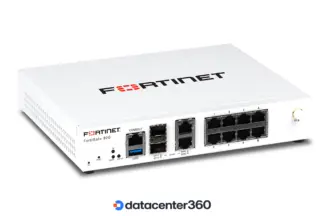
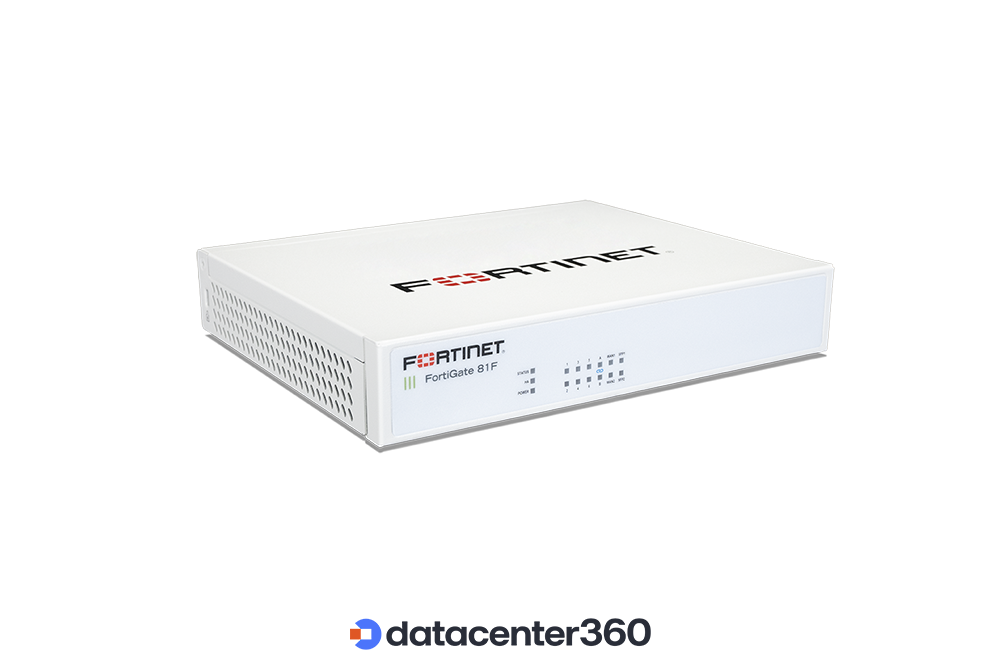
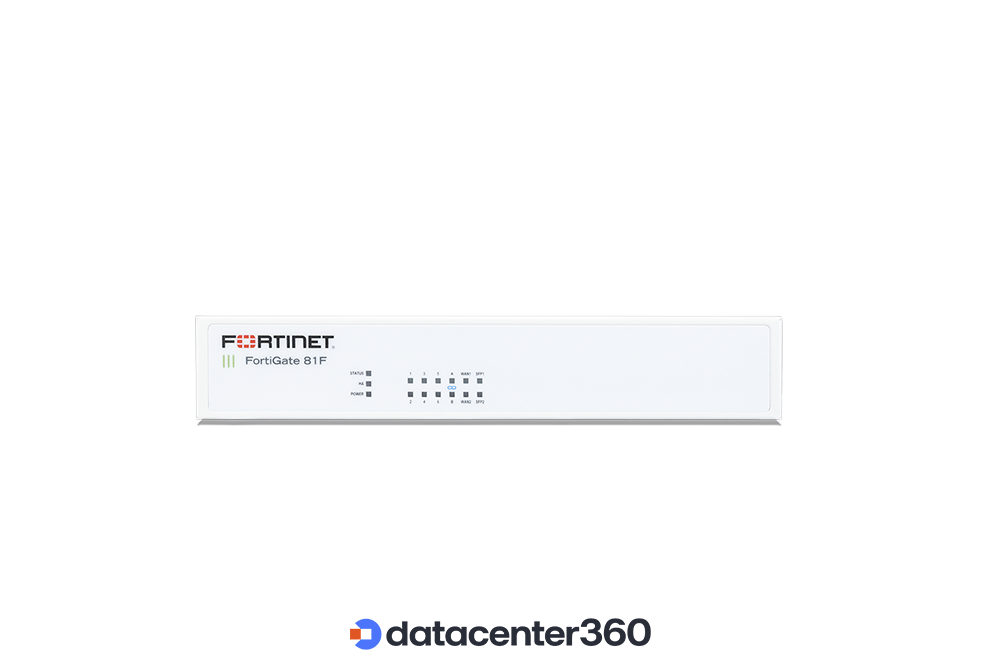
Redundancy at the edge costs nothing if the secondary node isn’t ready to take over. The FortiGate 81F-POE HA unit (FG-81F-POE-HA) is the second appliance in a two-node 81F-POE cluster — hardware identical to the primary, synchronized in real time, ready to take over in under a second if the primary goes offline. Eight PoE+ LAN ports and a 128 GB SSD on both nodes mean the cluster can sustain full PoE loads through failover without a power cycle on attached IP phones, cameras, or access points.
Hardware only — the appliance, one 54V DC power adapter, a console cable, and rack mounting hardware. No FortiGuard subscription is included. The primary’s FortiCare license covers the HA cluster for security service updates, but the secondary should carry its own FortiCare support contract to ensure RMA coverage applies to both nodes.
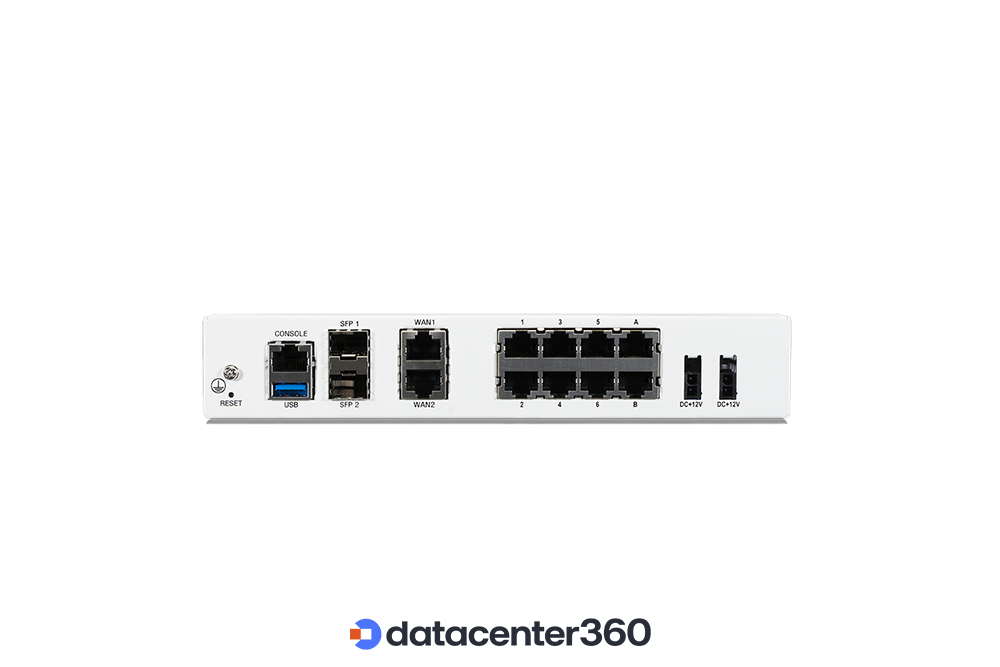
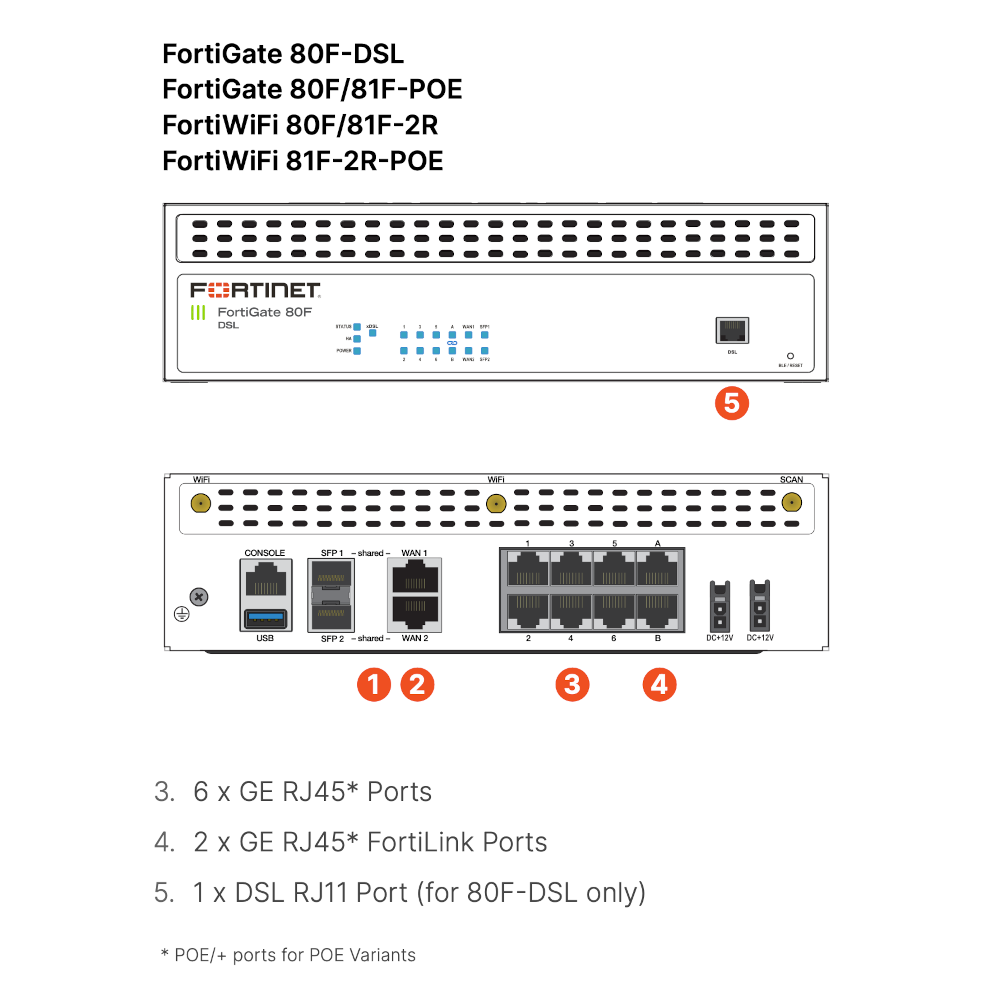
| GE RJ45 PoE/+ LAN Ports | 6 |
| GE RJ45 PoE/+ FortiLink Ports (default) | 2 |
| GE RJ45/SFP Shared Media WAN Ports | 2 |
| Internal Storage | 1× 128 GB SSD |
| Total PoE Power Budget | 96 W (max 30 W per port, 802.3at) |
| IPS Throughput | 1.4 Gbps |
| NGFW Throughput | 1 Gbps |
| Threat Protection | 900 Mbps |
| IPv4 Firewall Throughput | 10 Gbps |
| IPsec VPN Throughput (512 B) | 6.5 Gbps |
| SSL-VPN Throughput | 950 Mbps |
| Concurrent Sessions (TCP) | 1.5 Million |
| Firewall Policies | 5,000 |
| HA Modes | Active-Active, Active-Passive, Clustering |
| Power Consumption (Avg / Max) | 98 W / 137 W |
| Dimensions (H × W × D) | 60 × 216 × 178 mm |
Healthcare clinics, hospitality properties, and multi-floor offices that depend on IP phones and wireless APs powered through the firewall benefit most from a PoE-capable HA pair. During primary failover, the secondary becomes active and PoE resumes in seconds — far faster than waiting for a replacement appliance to arrive. The 128 GB SSD on each node also supports local FortiGuard log retention, giving both nodes an independent forensic record.
The hardware-only purchase makes sense when FortiGuard coverage is handled on a separate contract cycle or when a prior deployment already has active Enterprise or UTP subscriptions. If you’re starting fresh, a 1-year UTP or Enterprise bundle on the primary covers the full cluster. The secondary then needs only a FortiCare Premium contract for parts coverage — no duplicate FortiGuard spend required.
Network engineers at regional offices, VARs standardizing branch HA designs for retail chains, and MSPs building fault-tolerant edge deployments for clients in regulated industries. FortiManager simplifies day-two operations when you’re managing multiple HA pairs across sites — firmware upgrades, policy pushes, and cluster health all from one console.
When port count or throughput demands exceed the 81F-POE’s capabilities — typically at 300+ concurrent users or when multi-gig WAN links arrive — the FortiGate 90G is the natural successor. The 90G brings the FortiSP5 processor, 2.5 Gbps IPS, and expanded FortiLink capacity for larger FortiSwitch deployments.
DataCenter360.ca holds physical inventory of the FG-81F-POE-HA in Canada, which means both units in your HA pair can arrive on the same order, on the same day. As a Fortinet Select Partner, we can also quote the FortiCare Premium contracts for both nodes so the secondary isn’t left without support coverage on day one.
There is no hardware difference — the units are identical. The “-HA” suffix indicates the commercial role: the secondary node in a two-unit cluster. Either appliance can serve as the primary or secondary depending on how FortiOS HA is configured. The distinction exists mainly for quoting and purchasing clarity when both nodes are on the same order.
No. FortiGuard security services (IPS, AV, Web Filtering, Application Control) licensed on the primary FortiGate extend to the entire HA cluster. The secondary does, however, need its own FortiCare support contract to receive RMA hardware replacement and firmware update coverage. Running the secondary without FortiCare leaves it unprotected in case of hardware failure.
In active-passive mode, only the primary’s PoE ports are active during normal operation. When failover occurs, the secondary takes over and its PoE ports power up. PoE devices — phones, APs, cameras — typically reboot within 20–30 seconds. In active-active mode, each node independently powers its own PoE segment, so only devices attached to the failing node are affected.
Active-Passive (one node active, one on standby), Active-Active (traffic load-balanced across both nodes), and clustering. Active-Passive is the most common branch choice because configuration and session state sync continuously and failover is transparent to users. Active-Active provides higher aggregate throughput but requires FGCP heartbeat ports to be connected between both appliances.
Yes. The two FortiLink ports on each node can extend to FortiSwitch units, with the primary managing the switch fabric as a logical extension of the NGFW. The 81F-POE supports up to 24 FortiSwitches and 96 FortiAPs total. In HA, FortiSwitch management transfers to the secondary on failover, keeping the access layer online throughout the transition.
| Weight | 3.18 kg |
|---|---|
| Dimensions | 31 × 31 × 16 cm |
| Manufacturer | Fortinet |
| Model | FortiGate-81F-POE |
| GTIN | 195875409932 |
| Product Type | |
| Product Group | |
| End of Order Date (EOO) | Not published yet |
| Last Service Extension Date (LSED) | Not published yet |
| End of Support Date (EOS) | Not published yet |
| Product Family | FG-10 to FG-100 |
| MPN | FG-81F-POE-HA |
Sorry, no reviews match your current selections