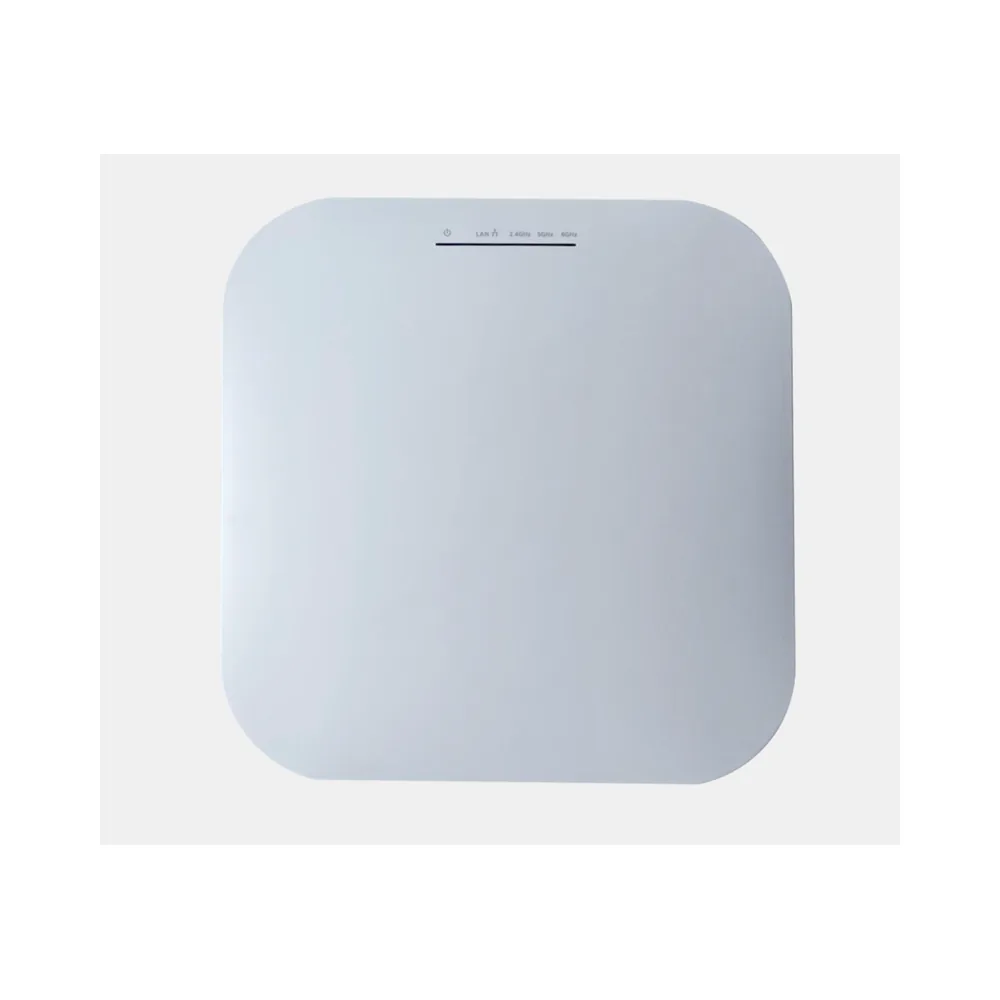
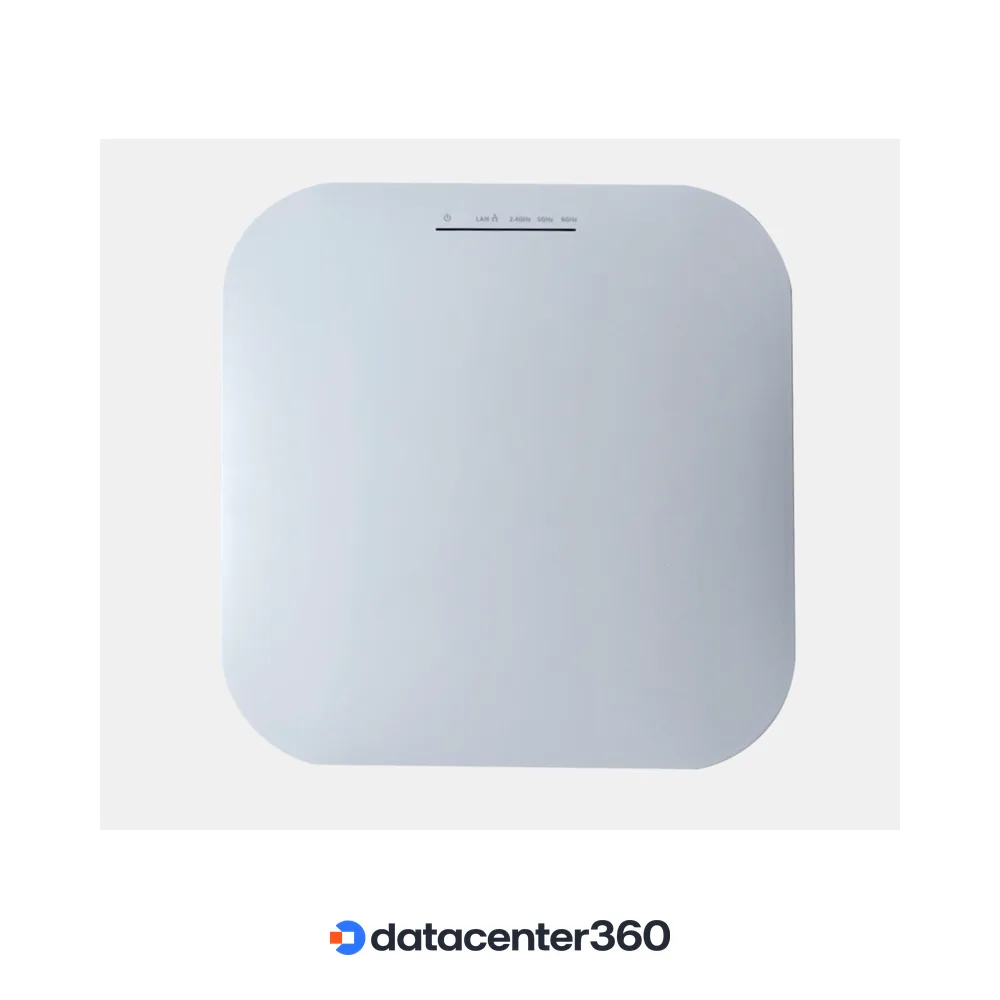
The long-throw member of the ultra-high-density family, and the left-beam half of a mirrored pair. Two Wi-Fi 7 radios on dual 5 GHz behind a fixed 15° x 17° antenna at 17 dBi — the highest gain in the FortiAP line — reaching about 250 ft to serve 1,024 associated devices. Deployed alongside its mirror image, the HD-224KR, so one overhead position covers two adjacent seating blocks: this unit takes the left.

The configurations most customers buy: the access point on its own, or with FortiCare Premium support. The complete catalog is further down.
| Configuration | Price & action |
|---|---|
| FortiAP HD-224KL outdoor ultra-high-density access point, fixed ultra-narrow LEFT beam. License not included. | View productFAP-HD-224KL-A |
Brand-new, sealed · ships same / next business day · price shown live in your selected currency.
| Support | 1 Year | 3 Years | 5 Years |
|---|---|---|---|
| FortiCare Premium 24×7 TAC, advanced hardware replacement & firmware updates. Most-purchased tier for new APs. | View productFC-10-HD2KL-247-02-12 | View productFC-10-HD2KL-247-02-36 | View productFC-10-HD2KL-247-02-60 |
FortiCare and subscriptions delivered electronically worldwide · prices shown live in your selected currency · add-to-cart enabled when in stock.
Big venues have a geometry problem. The seats that are hardest to serve are the ones no access point can sit above — an upper deck across the bowl, a stand with no catwalk over it, a grandstand where nothing can be rigged in the sightlines. The HD-224KL is built for exactly that shot. Two Wi-Fi 7 radios on dual 5 GHz feed a fixed 15° by 17° antenna at 17 dBi peak gain, the highest in the FortiAP range, which puts usable signal on a target block roughly 250 ft away. That is a third further than the steerable HD-444KN and more than three times the HD-444KW.
The KL is one half of a pair. Its beam is fixed and aimed left of the mount axis; the HD-224KR is the identical unit with the beam aimed right. Because neither can be steered — the scan range is 0° to 15°, about plus or minus 7.5° of trim, not real aiming latitude — the coverage design happens on paper before anything is rigged. The normal pattern is to mount a KL and a KR together at one position and let them cover two adjacent seating blocks from a single structural point, one cable run and one set of rigging. Order them in pairs and count your left-hand blocks: that is your KL quantity. If you only need one side covered from a given mount, order only the matching hand.
The trade for that reach is capacity per unit, and it is a deliberate one. Two radios rather than four, 2x2 rather than 4x4, 80 MHz channels rather than 160, no 6 GHz radio, 3 Gbps peak PHY, 1,024 associated devices and 100 or more concurrently active. That is still a full seating block, and it draws only 33 W against the 444K pair's 51 W. Backhaul is the same as the rest of the line: one 10 Gbps port plus one 5 Gbps port over 802.3bt, in an outdoor high-density enclosure. Management is the FortiAP-HD WLAN controller, licensed separately per site.
The high-density models are chosen by throw distance and beam direction, not by throughput — they all carry serious capacity.
| Type | Outdoor ultra-high-density access point, Wi-Fi 7 (802.11be) |
| Beam direction | Fixed LEFT — the HD-224KR is the identical unit aimed right; the two are normally deployed as a pair |
| Wi-Fi radios | 2, both on 5 GHz (no 6 GHz and no 2.4 GHz radio) |
| MIMO | 2x2 per radio · 4 concurrent streams |
| Max PHY rate | 3 Gbps |
| Channel width | Up to 80 MHz |
| Associated devices | Up to 1,024 per AP |
| Concurrently active devices | 100+ |
| Antenna | Internal, integrated, ultra-narrow fixed beam |
| Beamwidth (El x Az) | 15° x 17° — the narrowest in the FortiAP High Density line |
| Scan range | 0° / 15° (about +/- 7.5° of trim) — effectively fixed; aim is set by mount position |
| Peak antenna gain | 17 dBi on 5 GHz — the highest in the FortiAP line |
| Coverage range | Up to 250 ft — the longest throw in the line |
| Diversity | Not applicable on this model |
| Polarization | Vertical and horizontal |
| 6 GHz AFC standard power | Not applicable (no 6 GHz radio) |
| Ethernet | 1x 10 Gbps + 1x 5 Gbps |
| Power over Ethernet | 802.3bt supported |
| Power consumption | 33 W maximum — the lowest draw in the high-density line |
| Management | FortiAP-HD WLAN controller (LIC-WMS-HD-SW, licensed separately per site) — up to 1,000 APs and 100,000 clients per controller |
| Dimensions / weight | 18 x 14 x 3 in (44 x 34 x 8 cm) · 8.8 lb (4.0 kg) |
| Enclosure | Outdoor high-density enclosure |
Source: official Fortinet FortiAP High Density Series datasheet, per-model comparison table (FAP-HD-224KL column). The detailed environmental and reliability table in that datasheet is scoped to the 444Kx series, so those figures are not quoted here — ask us for the current environmental ratings before specifying an installation. Frequency selection and transmit power are limited by regional regulation.
Download the full datasheet
Every Fortinet purchase from DataCenter360.ca is backed by hands-on services across the full lifecycle — from rollout to round-the-clock protection.
The KL and KR are the same access point with mirrored fixed beams, normally ordered as a pair so one mount covers two adjacent blocks. The 444Kx pair is the shorter-throw, higher-capacity alternative with steerable beams.
| Model | Radios | Beam (El x Az) / scan | Range | |
|---|---|---|---|---|
| FortiAP HD-224KL | 2 (dual 5 GHz) | 15° x 17° fixed left | 250 ft | Viewing |
| FortiAP HD-224KR | 2 (dual 5 GHz) | 15° x 17° fixed right | 250 ft | View → |
| FortiAP HD-444KN | 4 (5 / 6 GHz) | 15-45° x 30° · 70° scan | 150 ft | View → |
| FortiAP HD-444KW | 4 (5 / 6 GHz) | 110° x 110° · 360° scan | 75 ft | View → |
| FortiAP HD-441K | 4 + scan (2.4 / 5 / 6 GHz) | Hemispherical, indoor | Indoor cell | View → |
Choose the KL for a block to the left of the mount axis and the KR for one to the right. Step to the HD-444KN when the shot is under 150 ft and you want four radios and 6 GHz.
Every available SKU for the FAP-HD-224KL: access point hardware (Americas region) and FortiCare Premium support. The high-density line has no Essential, Elite or priority RMA SKUs. Licensing delivered electronically worldwide.
| Configuration | Price & action |
|---|---|
| FortiAP HD-224KL outdoor ultra-high-density access point, fixed ultra-narrow LEFT beam. License not included. | View productFAP-HD-224KL-A |
Brand-new, sealed · ships same / next business day · price shown live in your selected currency.
| Support | 1 Year | 3 Years | 5 Years |
|---|---|---|---|
| FortiCare Premium 24×7 TAC, advanced hardware replacement & firmware updates. Most-purchased tier for new APs. | View productFC-10-HD2KL-247-02-12 | View productFC-10-HD2KL-247-02-36 | View productFC-10-HD2KL-247-02-60 |
Available by quote — ask us for pricing.
FortiCare and subscriptions delivered electronically worldwide · prices shown live in your selected currency · add-to-cart enabled when in stock.
Advance hardware replacement is included in FortiCare Premium. Fortinet does not publish separate priority-RMA SKUs for the High Density line, so next-day, 4-hour and onsite-engineer coverage is arranged case by case — tell us the venue and the event calendar and we will quote it.
Available by quote — ask us for pricing.
FortiCare and subscriptions delivered electronically worldwide · prices shown live in your selected currency · add-to-cart enabled when in stock.
The FortiAP-HD WLAN controller licence is required to run this access point.
Ultra-high-density access points are managed by the FortiAP-HD WLAN controller, not by a FortiGate — the LIC-WMS-HD-SW software licence is per site and should be budgeted with the hardware. Because the KL beam is fixed, mount position is the aim: send us your seating plan and candidate mount points and we will work out the KL and KR quantities and quote the rigging with the APs.

The direction the beam points. They are the same access point — two Wi-Fi 7 radios on dual 5 GHz, 2×2, 17 dBi, a 15° x 17° fixed beam, 250 ft of reach, 1,024 associated devices, 33 W — but the KL’s beam is aimed left of the mount axis and the KR’s is aimed right. Neither can be steered in software, so you choose the hand at order time based on which seating block that mount position needs to cover. Most venues buy both and pair them.
One mount, one cable run and one set of rigging cover two adjacent seating blocks. Because the beams are fixed and very narrow, a single unit only serves the block it is pointed at, so pairing a left and a right at the same structural point is the efficient way to cover a span — particularly on a bowl where structural attachment points are limited and expensive.
About 250 ft, the longest throw in the FortiAP High Density line. It gets there with antenna gain: 17 dBi into a 15° by 17° beam, the tightest pattern Fortinet builds. For comparison, the steerable HD-444KN reaches about 150 ft and the wide HD-444KW about 75 ft.
No. It carries two radios and both operate on 5 GHz, with channels up to 80 MHz and a 3 Gbps peak PHY rate. Trading 6 GHz and 4×4 for gain and reach is the design choice that makes it a long-throw unit. If you need 6 GHz capacity, the HD-444KN and HD-444KW carry four radios across 5 and 6 GHz at up to 17.3 Gbps.
Up to 1,024 associated devices with 100 or more concurrently active — half the association capacity of the 444K pair, which reflects its two radios against their four. That is still sized for a full seating block, which is the unit of coverage it is designed around.
No. The ultra-high-density line is managed by the FortiAP-HD WLAN controller, a separate software platform licensed per site as LIC-WMS-HD-SW. One controller handles up to 1,000 access points and 100,000 clients across up to 256 wireless networks, with a split control plane so APs keep serving users if the controller link drops. Budget the licence with the hardware.
FortiCare Premium in 1, 3 and 5 year terms — 24×7 TAC, advance hardware replacement and firmware updates. The high-density line does not have Essential, Elite or priority RMA SKUs; Premium is the support tier for this family. Licensing is delivered electronically, worldwide.